
What is butter paper used for?
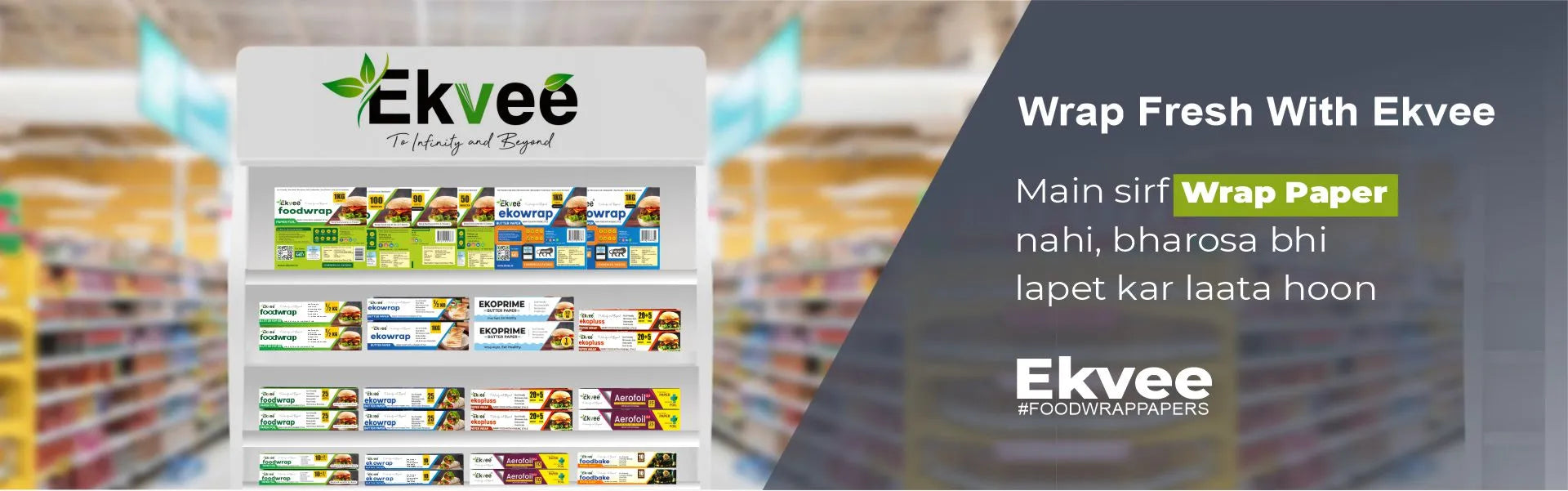
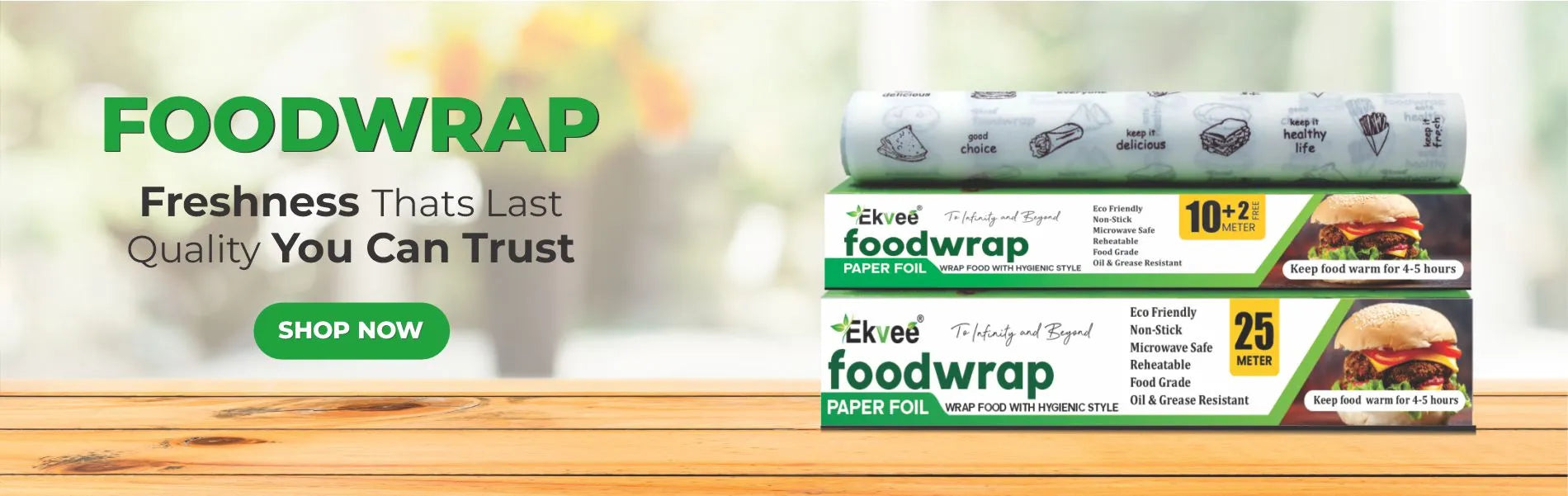
Explore the Range of Food Wrapping Papers
Discover Our Exquisite Butter Paper, Food Wrapping Papers, Aluminium Foil Paper and Baking Paper!
Wrap it up, keep it fresh


Our Products
Why Choose Ekvee?

Greaseproof

Moisture Balancing

Food Grade Ink

Biodegradable

Non-stick Surface
Latest Blog Posts

Aluminium foil has been a kitchen staple for several years. From wrapping lunch to including leftovers, it is fast, versatile, and user-friendly. But does that mean it is constantly the preferred choice for every food-wrapping requirement?
Not always. Modern kitchens require more than just a strong wrapping material—they need ease, usability, and food-friendly answers. This is where options such as 2-in-1 foil paper can provide a more useful method for daily food wrapping.
Aluminium Foil: Useful, But Not Always Enough
There is certainly no doubt that aluminium foil is helpful. It is adaptable, foldable, and suitable for wrapping and holding many types of food. However, when your wrapping needs change, using a one-layer material may not consistently offer the usability you are looking for.
Whether you're packing lunch, storing snacks, or wrapping organized food, the selection of wrapping material can make daily kitchen tasks simpler—or more confusing.
What Makes 2-in-1 Foil Paper Different?
As the name indicates, 2-in-1 foil paper blends two materials in one accessible wrapping solution.
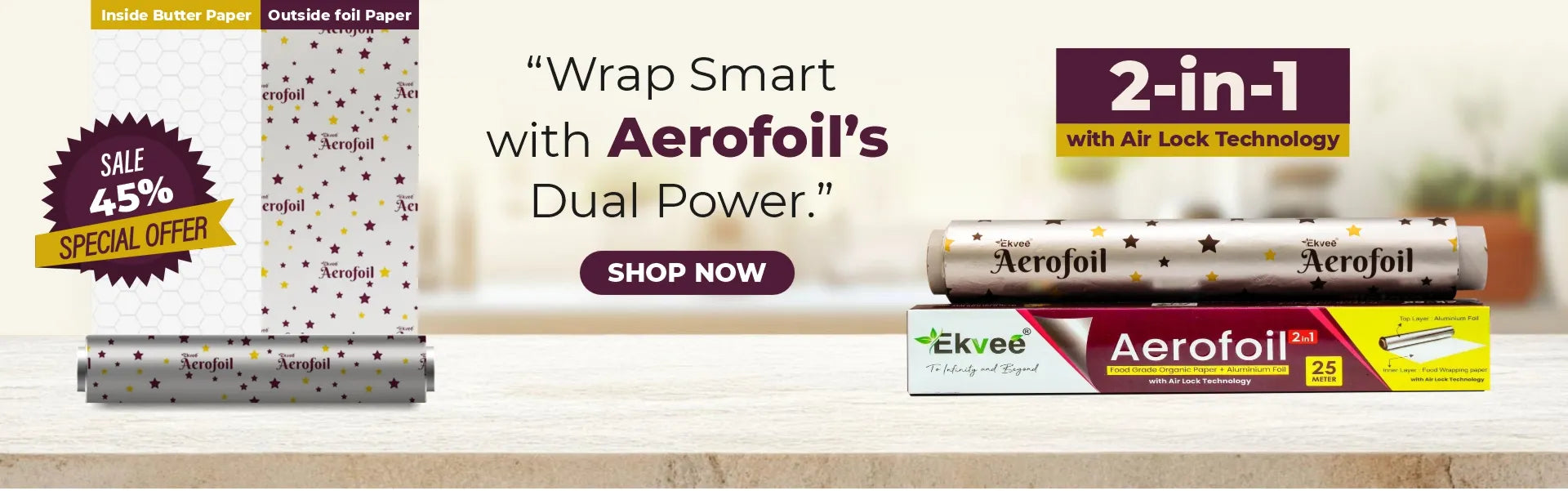
Ekvee Aerofoil features an aluminium foil outer layer and a food-grade paper inner layer. This two-layer structure combines the practical features of foil with a dedicated food-contact paper surface.
One essential variation is that the food is wrapped against the food-grade paper layer rather than immediately against the aluminium layer.
This makes it a user-friendly alternative when you want the utility of foil while also selecting a paper layer between the food and aluminium.
One Wrap, Two Functional Layers
Why use two independent wrapping materials when one product can't combine their features?
Ekvee Aerofoil features Air-Lock Technology and a Non-Stick Honeycomb Pattern, built for function. The blend of layers makes wrapping and managing food user-friendly for daily kitchen use.
From lunchboxes and snacks to arranged meals, a 2-in-1 answer can make easier the wrapping procedure while provide a distinct expertise from conventional foil.
For practical ideas, read how to start using 2-in-1 aluminium foil paper for kitchen efficiency.
What Does Your Kitchen Actually Need?
The best kitchen product isn't necessarily the most traditional one. It is the one that matches your daily essentials.
If you mostly need a simple material for essential covering, aluminium foil can stay a useful choice. But if you want a blend of food-grade paper and aluminium foil in one wrap, a 2-in-1 answer can be worth considering.
The key is selecting a product based on usability rather than simply following what has constantly been used.
Choose a Smarter Wrapping Solution with Ekvee
Ekvee Aerofoil is created for people who want a practical option to traditional foil. By blending a food-grade paper layer with an aluminium foil layer, it provides two useful materials combined in one easy-to-use product.
Explore the Aerofoil 10-meter roll or the Aerofoil 25-meter roll to choose the size that suits your kitchen.
Final Thoughts
Aluminium foil has its place in each kitchen, but it doesn't have to be the only choice. As daily food wrapping develops, 2-in-1 foil paper provides a user-friendly way to blend two functional layers in one wrap.
At times, the smarter kitchen option isn't about exchanging what already works—it's about selecting an answer that works better for the way you use it.

When it comes to keeping, wrapping, and preserving food, aluminium foil has been a well-known kitchen staple for years. But today, modern food wrapping strategies are modifying the way we pack and preserve our meals. One such development is 2-in-1 foil paper, which unites the useful advantages of aluminium foil with a food-safe paper layer.
So what makes it different from regular aluminium foil? Let’s discover it.
What Is 2-in-1 Foil Paper?
As the name indicates, 2-in-1 foil paper blends two layers in one practical answer. Ekvee Aerofoil features an aluminium foil outer layer and a food-grade paper inner layer.
This integration is created to provide the strength and shielding properties connected with foil while offering a food-contact paper surface. The concept is easy: two helpful materials, working collaboratively in one wrap.
Aluminium Foil vs 2-in-1 Foil Paper
Conventional aluminium foil is appreciated for its strength, versatility, and capacity to wrap food safely. It is broadly used for packing, including unique types of food.

However, 2-in-1 foil paper adds a layer to the wrapping process. With its food-grade paper side, it offers a dedicated surface for food contact, while the aluminium layer adds structure and security.
The variation can be particularly useful when you want the ease of foil along with the features of a paper layer.
For another look at the differences, read Aerofoil vs Ordinary Foil: The Game Changer in Your Kitchen.
Why Choose 2-in-1 Foil Paper?
The greatest benefit of a 2-in-1 remedy is practicality. Rather than managing individual wrapping materials for unique needs, you get two layers in a single product.
Ekvee Aerofoil is created with attributes such as Air-Lock Technology and a Non-Stick Honeycomb Pattern, assisting in making wrapping more useful and practical for everyday food packaging.
The internal food-grade paper layer also means food can be wrapped without immediately touching the aluminium layer, making the product a useful option for food wrapping and storage.
A Smarter Approach to Food Wrapping
Modern kitchens need products that are accessible, practical, and easy to use. That is where 2-in-1 wrapping remedies can come in.
Whether you're packing lunch, wrapping snacks, or keeping food organized, a product that blends two layers into one can clarify the wrapping procedure while providing added utility.
For practical ideas, explore How to Start Using 2-in-1 Aluminum Foil Paper for Kitchen Efficiency.
Why Choose Ekvee Aerofoil?
Ekvee Aerofoil provides food-grade paper and aluminium foil collectively in one creative wrap. Its two-layer building is created for practical food wrapping while preserving a practical, ease to use format.
For people looking above standard aluminium foil, 2-in-1 foil paper provides a modern option that merges the familiar strength of aluminium foil with the features of a food-grade paper layer.
When comparing your options, read our Foil Paper Buying Guide: Thickness, Size & Quality.
Final Thoughts
Aluminium foil stays a beneficial kitchen staple, but food wrapping is developing. 2-in-1 foil paper takes a different approach by integrating two materials into one practical solution.
With Ekvee Aerofoil, you get the features of two layers in a single wrap—making everyday food wrapping simpler, more practical, and accessible.

If you've ever looked for baking necessities, you've likely discovered two names again and again: parchment paper and baking paper. They look almost the same, are used for related recipes, and are frequently mentioned alternately. So, organically, one question comes to mind—are parchment paper and baking paper in fact distinct?
The short answer is: In several markets, they refer to the same kind of baking paper. Nevertheless, the accurate language and product requirements can differ by country and manufacturer. What actually matters is knowing what the paper is created to do.
Let's make it easy.
What Is Parchment Paper?
Parchment paper is a specially processed food-contact paper created for baking and cooking applications. It is usually made to offer a non-stick surface, making it simpler to bake and remove food from trays.
It is frequently used for cookies, cakes, pastries, bread, roasted vegetables, and other oven-based recipes.
Its major benefit? It is designed as a practical barrier between your food and the baking tray, assisting decrease sticking while also making clean-up much simpler.
What Is Baking Paper?
Baking paper is the word usually used for paper specifically created for baking. In various places, it is basically another name for parchment paper.
When a product is named baking paper, parchment paper, or baking parchment, don't rely on the name alone. Check the packaging for significant details such as oven relevance, highest temperature, food-contact practicality, and suggested applications.
This is particularly essential because not every paper that looks like parchment is appropriate for baking.
So, Are They the Same?
For daily baking purposes, parchment paper and baking paper are usually used to refer to a similar type of product.

The uncertainty mostly comes from local terms. One baker may call it parchment paper, while another may easily call it baking paper.
The essential difference is between goal-created baking paper and other food-contact papers. For example, paper designed mostly for food wrapping may not essentially be appropriate for oven use.
For a closer comparison, read Butter Paper vs Parchment Paper: What’s the Difference? If you need paper for wrapping rather than baking, explore the Ekowrap Butter Paper 10 Meter Roll and follow its product-specific instructions.
So, in place of asking only, “What is it called?” ask, “What is it designed for?”
Why Do Bakers Use Parchment Paper?
There are various reasons this simple sheet has turned into a baking essential. For more on these benefits, read Why Professional Bakers Choose Baking Paper.
Easy Food Release
One of the biggest benefits of parchment paper is its non-stick effectiveness. It helps baked goods come out more easily from the tray, decreasing the chances of broken cookies, stuck cakes, or damaged pastries.
Less Clean-up
Baking can be fun, but cleaning the determined remains from trays isn't. Parchment paper provides a protective layer between food and the tray, assisting in making clean-up faster and simpler.
Better Handling
Fragile foods can be challenging to move from a baking tray. With parchment paper below, you can often lift or slide the baked product more easily while preserving its shape.
Versatile Baking Companion
From cookies and brownies to pastries and roasted vegetables, parchment paper can be helpful across a wide range of recipes—offered the product is appropriate for the designed temperature and application.
How to Choose the Right Paper
When buying parchment or baking paper, don't select based on look alone. Look for a food-grade product particularly created for baking.
Check:
• Maximum recommended temperature
• Oven suitability
• Non-stick properties
• Food-contact suitability
• Manufacturer's usage instructions
Following this information assists assure you use the product safely and successfully. For further guidance, read Is Baking Paper Safe for High Heat? Safety Guide & Tips.
Why Choose Ekvee Baking Paper?
At Ekvee, we recognise that great baking relies on both quality ingredients and dependable kitchen necessities. Ekvee Foodbake Baking Paper 10 Meter Roll is created to make everyday baking more practical by offering an ideal baking surface that enables easy food release and clean-up.
If you're a passionate home baker or getting ready treats for family and friends, having the right baking paper can make the whole process smoother.
The Bottom Line
So, parchment paper vs baking paper—are they really different?
In frequently they're easily two names used for the same type of baking product. Still, product details can vary, so always check the product’s instructions before use.
The next time you reach for parchment paper, recall that it's not just another sheet in your kitchen drawer. It's an essential baking important that can assist make your baking expertise cleaner, simpler, and more engaging.
Bake with confidence. Release with ease. Choose Ekvee.
What Our Customers Think!
Frequently Asked Questions
We're Available on


