
What is butter paper used for?
Explore the Range
Discover Our Exquisite Food Wrapping Papers! Wrap it up, Keep it fresh
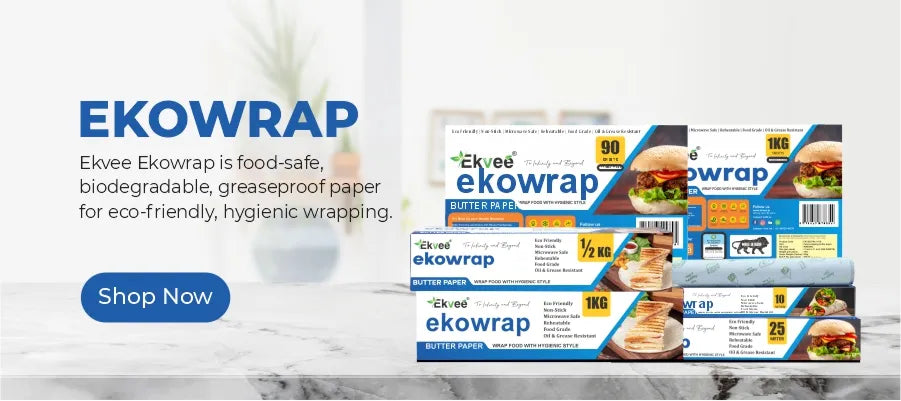
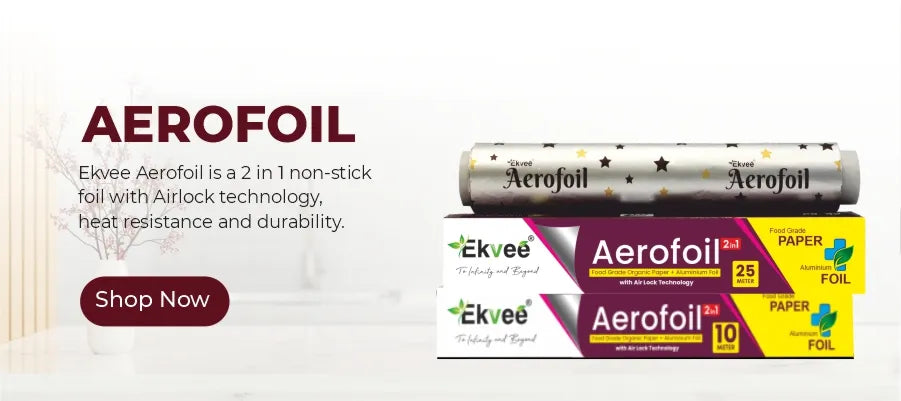
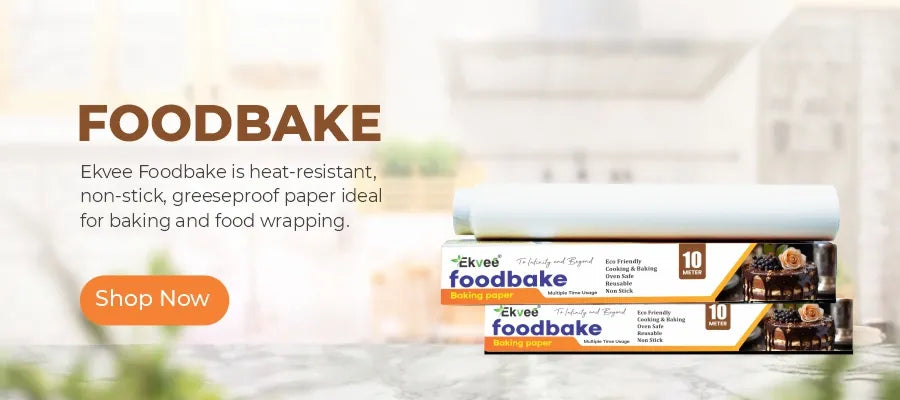
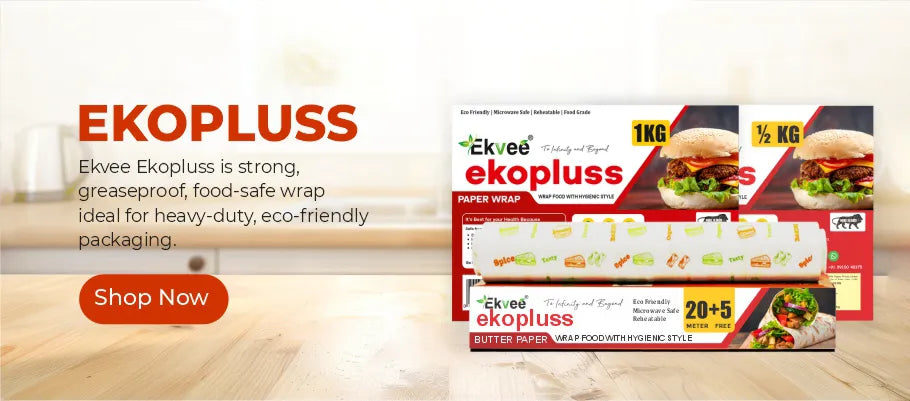
Our Products
Why Choose Ekvee?

Greaseproof

Moisture Balancing

Food Grade Ink

Biodegradable

Non-stick Surface
Latest Blog Posts

When it comes to storing or serving food, the type of foil paper you choose is more than you think. Whether you’re packing lunch for work, wrapping leftovers, or preparing food for a party, the right foil paper keeps your food fresh, safe, and delicious. In India, where varied cuisines and food habits require reliable food storage, choosing the best foil paper is crucial.
In this guide, we’ll walk you through everything you need to know — from the advantages of foil paper to the top choices available in India and how to pick the ideal one for your needs.
🍽️ Why Choosing the Right Foil Paper Matters
Foil paper is more than just shiny kitchenware — it’s an operational must-have. Here’s why:
✅ 1. Preserves Freshness
Aluminium foil acts as a barrier to air, moisture, and odours — keeping food fresh for an extended period. This is particularly helpful in hot climates where food can spoil quickly.
✅ 2. Maintains Temperature
Good foil paper helps maintain heat for hot foods and slows down decay for cold foods. This makes it perfect for picnics, travel, or hot takeaways.
✅ 3. Prevents Contamination
High-quality foil paper shields food from dust, microbes, and external contamination, which is essential for health and safety.
✅ 4. Environmentally Responsible Options Exist
Today’s foil papers are designed with environmental responsibilities in mind — recyclable and reusable in many cases.
📌 What to Look for in Foil Paper
Before we list the top products, here are the factors you should consider:
🔹 Material & Thickness
• Thicker foil = better protection and less tearing
• Look for food-grade aluminium
🔹 Non-Stick Surface
A non-stick layer helps avoid food from sticking and tearing, making it ideal for greasy or delicate foods.
🔹 Heat Resistance
Useful when baking or heating wrapped food in an oven.
🔹 Ease of Use
Perforations, a tear-resistant design, and smooth edges add convenience.
🔹 Safety Certifications
Always look for products with food safety certifications approved for direct food contact.
⭐ Top Foil Papers for Food Wrapping in India
Here are some of the best options that merge quality, durability, and value:
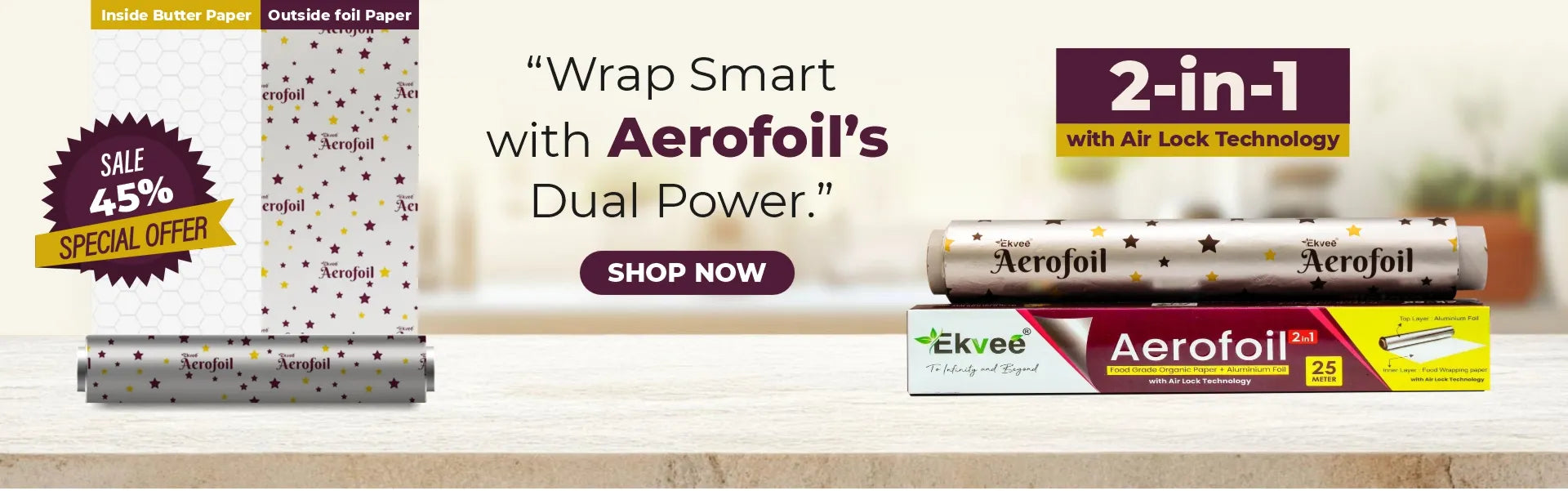
1. Aerofoil by Ekvee – Premium Non-Stick Foil Paper
If you’re looking for foil paper that does it all, Aerofoil by Ekvee stands out.
✔ Air Lock Technology – Keeps food fresher for longer
✔ Non-Stick Honeycomb Pattern – No sticking, easy food release
✔ Durable & Tear-Resistant – Strong enough for heavy-duty wrapping
✔ Food-Grade Safety – Perfect for cooking, baking, and storing
Whether you’re wrapping hot aloo parathas, marinated kebabs, or leftover biryani, Aerofoil guarantees zero wastage and maximum freshness. It’s appropriate for both home kitchens and commercial kitchens.
👉 Pro tip: Use Aerofoil for casseroles or grilled foods — the honeycomb pattern helps improve heat distribution and avoids sogginess.
2. Standard Heavy-Duty Aluminium Foil Rolls
Heavy-duty foil is a timeless option for Indian kitchens. It’s strong and great for:
- Wrapping large food portions
- Lining baking trays
- Slow cooking or tandoor-style dishes
While typically cost-effective, make sure you pick food-safe, thick foil that prevents tearing.
3. Refrigerator & Freezer Foil Sheets
These sheets are often thinner but very easy to use for:
- Wrapping snacks and breads
- Freezer storage
- Quick lunchbox wrapping
They are easy to cut and fold, but may not be ideal for baking or extended cooking.
4. Baking-Specific Foil Paper
If you bake often, choose foil paper labelled for oven-safe or baking use. These are designed to:
- Withstand high heat
- Prevent burning
- Provide crisp browning for foods like grilled vegetables or tandoori items
Great for special occasions and party prep.
🍱 Practical Uses of Foil Paper at Home
Here’s how foil paper makes regular kitchen life:
🥪 Lunchbox Wrapping
No leaks, no mess —ideal for parathas, sandwiches, and cut fruits.
🍗 Marinating & Grilling
Wrap seasoned meats or paneer to lock in flavour.
🍲 Leftover Storage
Keeps food fresh and odour-free in the fridge.
🍠 Baking & Roasting
Line trays or wrap food immediately for oven cooking.
Tips for Safe and Smart Use
🔹 Do not use foil paper right away on an open flame.
🔹 Avoid contact with highly acidic foods (like lemon or tomato) for an extended period — it can cause foil erosion.
🔹 Recycle responsibly — aluminium foil is recyclable when clean.
💡 Final Thoughts
Choosing the best foil paper for food wrapping can make your kitchen routine cleaner, safer, and better performing. In India’s active food culture — whether it’s everyday cooking or festive feasts — the right foil paper is a breakthrough.
From everyday use to professional-grade wrapping, Aerofoil by Ekvee improves food storage with improved technology and thoughtful design. Join quality with usefulness and say goodbye to soggy leftovers, torn foil, and messy food packs!

In a rapid-paced commercial kitchen or a large-scale bakery, each tool must improve efficiency, be optimised, and be contamination-free. Among mixers, ovens, and moulds, one simple yet high-performance material seamlessly supports the daily process—baking paper. Often underappreciated, baking paper has become a backbone for commercial kitchens that value speed, hygiene, and reliable results.
From artisan bakeries to industrial food production units, baking paper supports chefs' emphasis on creativity while securing efficiency. Let’s examine the top uses of baking paper/parchment paper in commercial kitchens and bakeries—and why it’s a mandatory essential.
1. Non-Stick Baking for High-Volume Production
One of the reasons why baking paper is so highly appreciated is its ability to resist sticking well. When trays go into the oven by the hundred, any degree of sticking could lead to lost product or delays.
Baking Paper helps in the easy removal of:
- Cookies and brownies
- Bread loaves and buns
- Cakes and sponge bases
This uniformity is crucial for retaining the identical form, texture, and finish—the essence of commercial display and consumer satisfaction.
2. Faster Turnaround & Improved Kitchen Efficiency
Speed is paramount in a commercial kitchen. Parchment baking paper removes the requirement to grease trays or moulds, saving a tremendous amount of time in preparation. Once baking is complete, trays can be cleared, wiped, and reused almost immediately.
This means:
- Faster batch cycles
- Reduced labour effort
- Smoother workflow during peak hours
There is baking paper that can bear high temperatures and continuous usage for bakeries with consecutive production schedules, ensuring continuous, uninterrupted operations without quality loss.
3. Cleaner Equipment, Lower Maintenance
Grease accumulation and burning residue are common issues in busy kitchens. Baking papers work as an active barrier between the food and the trays to prevent the accumulation of oils, sugar syrup, and fillings.
This results in:
- Wash and soak less
- Increased lifespan of baking trays and moulds
- Enhanced standards of hygiene and kitchen efficiency
A cleaner kitchen saves time as well as helps with food safety regulations, which is a crucial element for food-related businesses.
4. Heat Stability for Consistent Baking Results
There is a need for accuracy in commercial baking. Baking paper is made to handle high temperatures from the oven. At the same time, it ensures adequate distribution of heat along the surface of the food.
This assists in achieving:
- Controlled moisture retention
- Uniform texture in the product
Whether it is making macaron cookies or making bread, baking paper ensures consistency in performance.
5. Versatility Beyond the Oven
Far from being just a simple baking aid, baking paper is extremely versatile, turning this product into a multi-functional workhorse within the commercial kitchen.
Other common alternative uses include:
- Lining of work tables for dough preparation
- Wrapping of butter, chocolate, or confectionery items
- Separating tiered bakery items
- Making a dough roll and shaping it without additional flour
This versatility decreases dependency on several materials and simplifies kitchen inventory.
6. Ideal for Large-Scale Baking & Batch Control
In large bakeries, baking paper makes items more standardised and consistent in size and portion. The pre-cut baking sheet makes it easier to cover a tray uniformly, hence increasing portion control and consistency
This is particularly helpful when dealing with:
- Industrial baker
- Cloud kitchens
- Catering
- Food production centres
Standardised baking surfaces create consistency between brands, which is recognisable to consumers from the moment they see it.
7. Supports Grease Management & Food Presentation
For products containing high amounts of butter, oil, or cheese, baking paper absorbs the excess grease without affecting the texture. This leaves the final product clean with improved appearance.
In bakeries where presentation matters, this small detail ends up making a very big impact, especially when it comes to products such as pastries, croissants, and savoury bakes.
8. Sustainable & Responsible Choice When Sourced Right
Sustainability is increasingly becoming the focus of concern for many, with the result that many commercial kitchens are turning to responsibly sourced baking paper. Quality baking paper prevents waste by limiting the amount of rejected products, detergents, or excessive use of oil.
Being packaged from a reliable supplier such as EKVEE, foodbake baking paper roll can be an effective aid in terms of operational efficiency as well as an environmentally friendly practice.
Why Baking Paper Is a Must-Have for Modern Kitchens
Commercial kitchens, as well as bakeries, know success is made through consistency, velocity, and the right allocation of resources. Baking paper does all three, quietly, every day.
This helps streamline processes, safeguard machines from damage, enhance the quality of food products, and maintain high hygiene standards. Whether it’s a small bakery or an industrial baking setting, baking paper is more than just a helpful resource; it is essential.
We at EKVEE know the true requirements of a commercial kitchen. Our baking paper is designed to perform in these conditions, to perform where it counts.
Because in commercial bread-making, the smallest detail is the most significant.

In today’s high-velocity food industry, packaging is no longer just about wrapping a product—it’s about preserving quality, improving visual appeal, and providing a better customer experience. As consumer requirements rise and food brands stand out in the market, one packaging material has gradually become fundamental: greaseproof paper.
From street food counters to high-quality bakery brands, greaseproof paper is transforming how food is packed, served, and regarded. Its adaptability, functionality, and sustainability factors make it a true game-changer for advanced packaging solutions.
The Growing Demand for Smarter Food Packaging
The food industry has developed rapidly. Fast-delivery restaurants, cloud kitchens, bakeries, and takeaway brands now manage in an environment where speed, hygiene, and eco-smart design are mandatory. Customers want food that reaches their hands fresh, visually appealing, and feels safe to consume.
This is where greaseproof paper plays an essential role. Designed to endure oil and moisture, it guarantees that food stays intact, packaging remains clean, and the overall presentation continues to be appealing—no soggy wraps or greasy stains.
What Makes Greaseproof Paper So Effective?
Greaseproof paper is manufactured with a compact fibre structure that prevents oil and fats from leaking. Unlike ordinary paper, it preserves its strength even when exposed to greasy or moist foods.
Its main benefit lies in its capability to handle an extensive selection of food items—hot, cold, oily, or baked—without sacrificing quality. Whether it’s wrapping a crispy croissant or coating a box of fries, greaseproof paper operates steadily.
Enhancing Food Presentation and Brand Value
First impressions matter, particularly in the age of social media. Food that appears neat and well-packaged immediately feels more luxurious. Greaseproof paper helps preserve that visual appeal by keeping packaging clean and organised.
For brands, this converts into a stronger brand opinion. Custom-printed greaseproof paper can also be used as an understated branding tool, transforming simple wraps into brand ambassadors. Every takeaway order becomes a prospect to strengthen identity and professionalism.
A Versatile Solution Across Food Segments
One of the biggest advantages of greaseproof paper is its flexibility across multiple food categories:
- Bakeries & Cafés: Ideal for wrapping pastries, cakes, cookies, and breads without affecting texture or freshness.
- Quick-Service Restaurants: Perfect for burgers, wraps, sandwiches, and fries, where oil control is essential.
- Street Food & Takeaways: Helps maintain hygiene while offering convenience and durability.
- Food Delivery & Cloud Kitchens: Ensures food reaches customers in a clean, presentable condition despite longer delivery times.
This adaptability makes greaseproof paper a standard in both authentic and contemporary food operations.
Supporting Sustainability Goals
Sustainability is no longer a trend—it’s an objective. Consumers are gradually becoming conscious of the environmental impact of packaging materials. Greaseproof paper, particularly when produced responsibly, offers a more long-lasting alternative to plastic-based food wraps.
Paper-based solutions are simpler to recycle and align well with worldwide initiatives to minimise single-use plastics. By selecting high-quality greaseproof paper, food brands can take a significant step toward eco-conscious packaging without reducing performance.
Hygiene and Food Safety at the Core
Food safety can play a critical role in the handling of foods at all stages. Greaseproof paper provides a protective covering over the food as well as from outside contaminants.
Its food-safe qualities are an added advantage as it can be in direct contact with food and provides consumers with an added safe and hygienic attribute when choosing their food products. In today’s world, cleanliness and safety are key factors influencing the purchasing aspect.
Cost-Effective Without Cutting Corners
Greaseproof papers, despite having high-performance characteristics, are still an inexpensive packing solution for businesses. Greaseproof papers have strength properties that eliminate the need for double wrapping or the use of inner liners.
Further, it is easy to use. This ensures that operations are more efficient because employees can pack as well as serve meals faster. This is particularly crucial, especially when dealing with large volumes.
Why Greaseproof Paper Is the Future of Food Packaging
With innovations rising in the food industry, packaging materials should not be left behind. Greaseproof paper is exceptional because it combines functionality, beauty, environmental factors, and cost-effectiveness.
For contemporary food brands, this is no longer an alternative option, but has instead become essential. "Whether it's better food presentation, better hygiene, or going greener, grease-proof paper meets all these criteria."
EKVEE: Powering Smart Packaging Solutions
At EKVEE, we are well aware of the dynamic needs associated with the food sector. Our premium greaseproof paper line has been designed to take care of the current requirements associated with modern packaging.
In a world where the voice of the package speaks just as loudly as the product, greaseproof paper shows that intelligent decisions lead to lasting impacts. For any food business that wants to stay one step ahead, it simply has to be a requirement.
What Our Customers Think!
Frequently Asked Questions
We're Available on